Jesse Kaye Brings Tobacco Treatment Expertise to Family Medicine
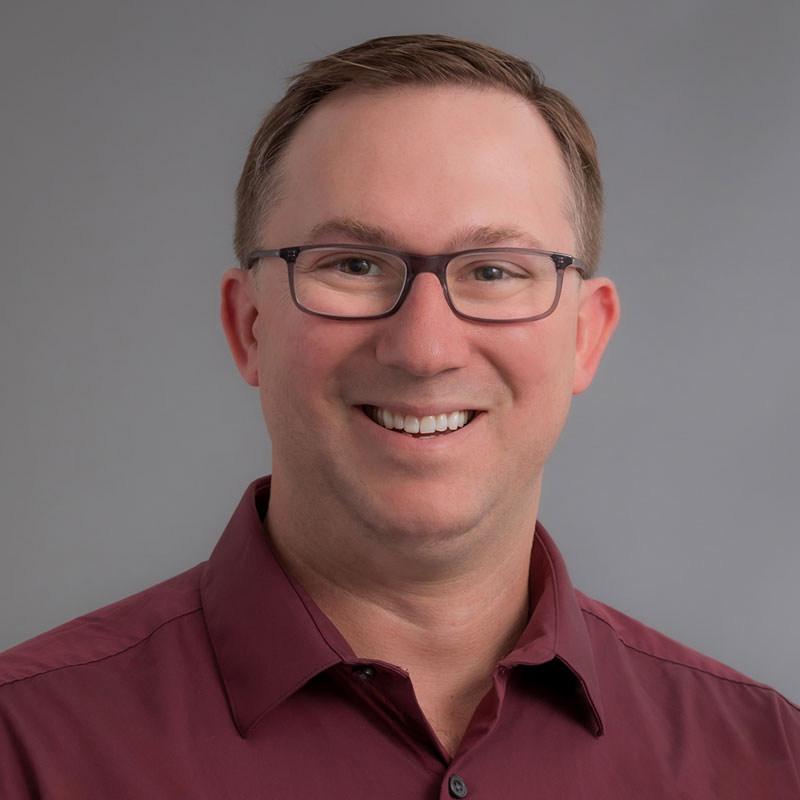
When Jesse Kaye considered his next career move, he was drawn to a department whose values aligned closely with his own. Kaye, a nationally recognized tobacco researcher with a PhD in clinical psychology, recently joined the UW Department of Family Medicine and Community Health (DFMCH) as an assistant professor. In this role, he sees opportunities to advance whole-person care, strengthen addiction treatment, and improve health outcomes across Wisconsin.
Kaye has long been fascinated by the brain and its influence on how people experience the world.
“The brain is one of the most complex organs in the body and one of the ones we know the least about, yet it has the biggest influence on how we show up and experience the world,” he says.
That curiosity led him to addiction research and a desire to understand why people continue behaviors that conflict with their long-term goals. “For so long, we’ve had this idea that addiction is just a matter of willpower,” Kaye says. “But decades of science show us it’s not that simple.”
Addiction and Tobacco Use
Smoking creates deeply ingrained behavioral and neurobiological patterns that make quitting extraordinarily difficult. Understanding those challenges, Kaye believes, is essential to reducing stigma and helping people access support.
“Most people who become addicted to a substance don’t want to stay in that state,” he says. “They deserve evidence-based treatment and support.”
After earning his doctorate at UW–Madison, he joined the UW Center for Tobacco Research and Intervention (CTRI), one of the nation’s leading tobacco research centers. For nearly 35 years, UW-CTRI has helped shape tobacco treatment policy and practice nationwide. Kaye values the center’s commitment to translating research into action.
“UW-CTRI really takes the Wisconsin Idea to heart,” he says. “We’re not just building evidence. We’re making sure that evidence gets into health care systems and communities where it can improve people’s lives.”
Despite increased attention to other substances, smoking remains the leading preventable cause of death in the United States.
“There is no clinical intervention that can have a greater impact on someone’s health than helping them quit smoking,” Kaye says.
Why Family Medicine?
For Kaye, joining DFMCH was a natural fit because tobacco treatment aligns closely with the department’s focus on prevention and community health.
“There is no chronic disease that isn’t made worse by smoking and made better by quitting,” he says. “Primary care is where so much of that work begins.”
He was also drawn to the department’s addiction medicine program. People with substance use disorders smoke at much higher rates than the general population, yet tobacco use has often been treated as a lower priority than other addictions.
“Quitting smoking isn’t separate from recovery,” Kaye says. “It can actually support recovery.”
Kaye is particularly interested in expanding tobacco treatment services and improving access to care for populations with high smoking rates, including people living in rural communities, individuals with substance use and behavioral health conditions, those involved in the criminal legal system, people experiencing socioeconomic disadvantage, and individuals with cancer.
As tobacco and nicotine products evolve, his research addresses emerging challenges, including the intersection of tobacco and cannabis use. In 2025, he helped organize the first UW–Madison Cannabis Research Conference to spark thoughtful conversations and connections across campus on cannabis science.
“The rise in cannabis use is outpacing the science,” he says. “We need much more research to understand the implications for population health.”
While emphasizing the importance of preventing youth nicotine use, he believes clinicians should have informed conversations with adults about evidence-based approaches that may help them quit combustible cigarettes.
Among Kaye’s recent accomplishments is helping launch a tobacco treatment program at the UW Health Carbone Cancer Center. The program automatically connects patients who smoke with specialists who can provide counseling and medication support.
“By flipping the script from opt-in to opt-out, we’re able to engage more people in treatment,” Kaye says.
Looking Ahead
Supported by a career development award from the National Institute on Drug Abuse, Kaye is using machine learning to better predict when someone trying to quit smoking may be at risk of relapse.
“If we can identify when someone’s risk is increasing, we may be able to deliver interventions at precisely the right moment,” he says.
He hopes these approaches will lead to more personalized treatment and better long-term outcomes.
For students interested in behavioral health and addiction research, Kaye offers simple advice: learn from both experts and patients.
“It’s important to talk to the experts and learn from the experts,” he says. “But it’s equally important to talk to people with lived experience.”
“They’re the experts in their own lives,” he adds.
Life Beyond Work
Outside the lab and clinic, Kaye spends much of his time with his family. His wife, Dani, leads a community mental health agency, and together they are raising two children and two dogs.
He is also a longtime Ultimate Frisbee enthusiast and has played in the Madison Ultimate Frisbee Association league for nearly two decades.
“We’re whole people,” Kaye says. “We’re not just our professions.”
That perspective mirrors the philosophy that brought him to family medicine: supporting health means understanding the whole person, not just the condition they are trying to overcome.
Recent News
-
DFMCH Delivers Top-Rated Clinical Training
The UW Department of Family Medicine ranks among the nation’s top programs,…
-
Wisconsin Retains 77% of DFMCH’s Newest Graduates
DFMCH celebrates the Class of 2026, with 77% of graduates remaining in…
-
KJ Hansmann, MD, MPH, PhD, Accepted to MTLE Fellowship
KJ Hansmann, MD, MPH, PhD, was accepted into the fall 2026 MTLE…
Contact Us
Do you have a newsworthy accomplishment to share?
Please send specific details and related photos to Laura Cruz.