Clinical and Elective Rotations
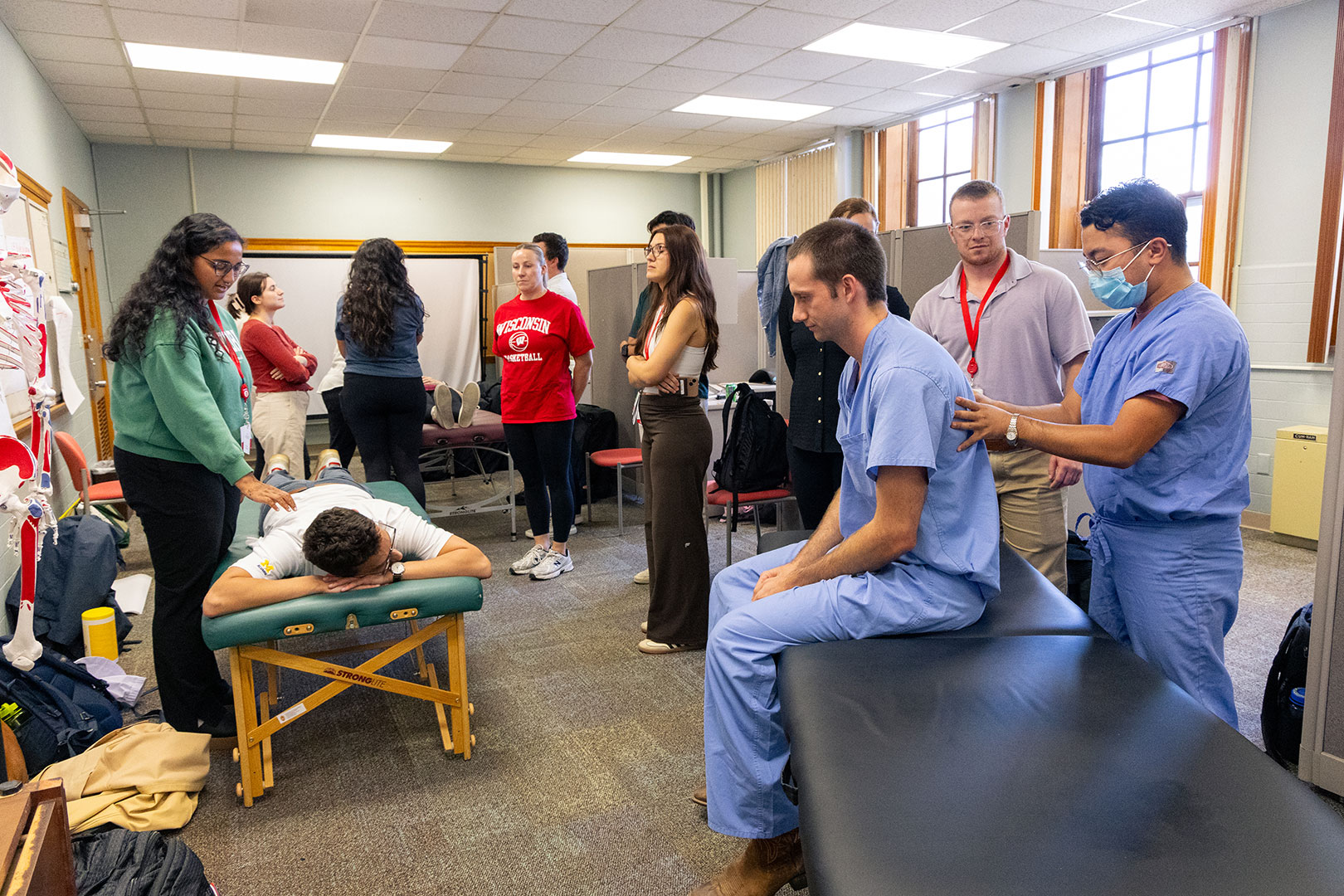
Our curriculum prepares residents for full-spectrum rural family medicine through a hybrid longitudinal training model that integrates outpatient, inpatient, obstetric, and emergency care experiences. Under the guidance of experienced faculty, residents build the skills and clinical judgment needed to care for patients across the lifespan while taking on increasing responsibility within the care team.
The program emphasizes hands-on patient care, strong continuity relationships, and flexibility for elective experiences that support residents’ interests and future rural practice goals.
Curriculum and Block Schedules
Baraboo Rural Training track residents complete many core rotations alongside residents in the Madison Family Medicine Residency Program. This structure provides broad exposure to inpatient and specialty services in Madison while residents begin building their continuity clinic panel in Baraboo.
Training spans adult medicine, pediatrics, obstetrics, emergency medicine, surgery, and community-based care across both academic and rural settings.
Core Rotations
Madison
- Adult Medicine — St. Mary’s Family Medicine Service – 2 blocks
- Adult Medicine — UW Hospital Family Medicine Service – 1 block
- Medical Intensive Care Unit — St. Mary’s Hospital – 2 blocks
- Pediatrics — St. Mary’s Hospital / American Family Children’s Hospital – 2 blocks
- Pediatrics / Family Medicine Night Cross Coverage — St. Mary’s Hospital – 1 block
Women’s Health and Obstetrics
Madison
- Obstetrics — St. Mary’s Hospital – 2 blocks
- Maternal Child Teaching Service — Meriter Hospital – 1 block
Procedural and Acute Care
Madison
- Emergency Medicine — St. Mary’s Hospital – 1 block
Baraboo
- General Surgery — St. Clare Hospital– 2 blocks
- Emergency Medicine — St. Clare Hospital– 1 block
Outpatient and Elective Experiences
- Outpatient Rotations — MSK, gynecology, ophthalmology, nutrition – 2 blocks
- Continuity Clinic — Dean Medical Group Family Medicine (Baraboo)
- Half-day sessions weekly; PGY1s begin building their patient panels
Vacation
- 3 weeks
Residents transition primarily to Baraboo-based training within a hybrid longitudinal model. They combine continuity clinic, inpatient care, obstetrics, emergency medicine, and call responsibilities while participating in elective learning experiences aligned with career goals.
Core Rotations
Madison
- Obstetrics Inpatient — St. Mary’s Hospital – 3 weeks
- MICU Inpatient — St. Mary’s Hospital – 3 weeks
- Sports Medicine – 3 weeks
Baraboo
- Pediatrics Outpatient– 3 weeks
- Community Health / Tribal Health / Management of Health Systems – 2 weeks
Longitudinal Training
Baraboo
- Continuity Clinic — Dean Medical Group Primary Care
- Approximately 40 weeks
- Minimum 4 half-days per week
Hospital and Call Responsibilities
Baraboo – St. Clare Hospital
- Family Medicine Inpatient / Hospitalist
- Approximately every other month
- Phone / OB / Pediatrics Call
- Approximately 2 times per month
Additional Experiences
- Elective Rotations – Varies
- Clustered Didactics – Madison
- Topics include gynecology, men’s health, and management of health systems
Geriatrics
Baraboo – St. Clare Hospital
- Family Medicine Inpatient / Hospitalist
- Approximately every other month
Vacation
- 4 weeks
Residents take on advanced clinical responsibility, leadership, and pursue elective specialization while they continue their longitudinal rural training in Baraboo.
Focused Rotations
- Musculoskeletal / Orthopedics – 1 week
- Gynecology – 1 week
- Management of Health Systems – 1 week
- Elective Rotations – Varies
Longitudinal Training
Baraboo
- Continuity Clinic — Dean Medical Group Primary Care
- Approximately 40 weeks
- Minimum 6 half-days per week
Hospital and Call Responsibilities
Baraboo – St. Clare Hospital
- Family Medicine Inpatient / Hospitalist – approximately every other month
- Phone / OB / Pediatrics Call – approximately 2 times per month
Geriatrics
Baraboo – St. Clare Meadows
- Nursing Home Rotation – Monthly
Didactics
- Clustered Didactics — Madison
- Topics include addiction medicine and musculoskeletal care
Vacation
- 4 weeks
Curriculum to Fit Your Interests
Requirements and Electives
Residents participate in a variety of longitudinal educational experiences designed to broaden clinical knowledge and prepare them for independent practice. These include home visits, dermatology, ophthalmology, urology, ENT, radiology, behavioral science, addiction medicine (Suboxone clinic), and practice management.
Residents also participate in didactics, scholarly work, and activities that support American Board of Family Medicine certification point completion. Training in management of health systems is incorporated through academic sessions and practice-based business meetings.
Residents can pursue elective experiences that support their individual interests and career goals. Examples of elective rotations that may be available through SSM Health St. Clare Hospital in Baraboo include:
- General surgery
- Rural emergency medicine
- Endoscopy
- Hospital medicine
- Addiction medicine
Availability of elective experiences varies depending on physician schedules and clinical capacity. Electives are arranged in coordination with faculty and program leadership to ensure appropriate supervision and educational value.
For more information or questions on elective residency rotations at SSM Health St. Clare Hospital – Baraboo, please email Jordan Buelow ( jordan.buelow@ssmhealth.com).
Behavioral health is a longitudinal and integrated component of the curriculum. Training emphasizes a biopsychosocial and integrative approach to care, supporting patient-centered, relationship-based family medicine. Residents learn to address the emotional, psychological, and social dimensions of health through team-based care, collaborating closely with behavioral science, family medicine physician, nurse practitioner, and physician assistant faculty across clinical sites.
Community health is a longitudinal component of the curriculum that prepares residents to practice patient- and community-centered family medicine. Through structured programming and protected time across all three years, residents learn to engage with community partners, understand local health resources, and address health needs specific to their clinic populations. Residents may develop individualized learning plans and community-based projects with support from faculty, the Office of Community Health, and community partners.
Additional educational requirements include the weekly Primary Care Conference or Journal Club, and family medicine seminars with a broad curriculum inclusive of the full spectrum of family medicine. There are also weekly resident-led teaching sessions and an EKG teaching series.
Parenting During Residency
Pregnancy and parenthood are common and supported within the residency. The program provides paid parental leave, flexible scheduling options, and dedicated educational opportunities to support residents during pregnancy, parental leave, and the transition back to clinical training. Accommodations are available to support lactating residents and promote wellness throughout residency.
Resident Support
Resident well-being is a priority of the program and is supported through intentional community-building, protected time for connection, and accessible leadership. Residents participate in regular social, reflective, and wellness-focused activities designed to foster support, resilience, and connection throughout training. Faculty, chief residents, and program leadership maintain an open-door approach and are actively engaged in supporting residents’ professional growth and quality of life.
Baraboo Program
Madison Program
Contact Us
Questions about applications and interviews can be sent to: kellie.churchhill@ssmhealth.com