The Power of Story: How Elizabeth Fleming Uses Narrative Medicine to Shape Patient Care and Medical Education
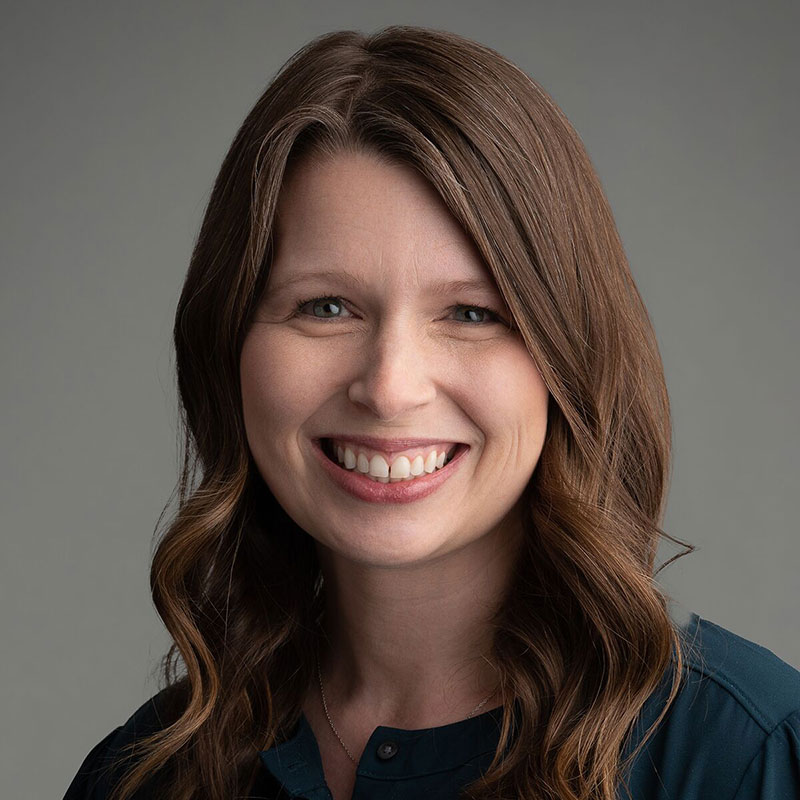
Dr. Elizabeth Fleming believes that science and the humanities can work together to help us understand and care for others. As a family physician, educator, researcher, and writer in the University of Wisconsin Department of Family Medicine and Community Health (DFMCH), she has built her career around the power of stories to improve patient care, support learners, and bring greater humanity to medicine.
“Being a family doc is such a beautiful way to care for patients,” Fleming says. “We are the keepers of so many stories because of our ability to care for people through many of the most impactful experiences of their lives.”
That perspective drew her to family medicine early in her training. A mentor who was both a family physician and writer encouraged her to pursue creative writing alongside clinical medicine and helped her see the connection between storytelling and patient care.
“She encouraged me to submit my writing for publication and fostered my love of primary care,” Fleming says. “I think about her so often when I mentor students now.”
Although she began her career in community practice, Fleming always envisioned a future in academic medicine. During the COVID-19 pandemic, she felt called to teach and expand opportunities for medical humanities at the University of Wisconsin School of Medicine and Public Health. To deepen her expertise, she completed a certification in narrative medicine through Columbia University.
“I still feel so lucky that the department has supported me in doing academic work in medical humanities,” she says, “because it is all grounded in the purpose and meaning of medicine.”
Today, Fleming’s work focuses on narrative medicine, patient-physician relationships, clinician wellness, and professional identity formation among medical trainees. Her research examines how language in the medical record influences patient care, bias, and the patient-physician relationship.
“Research shows that how we document in the medical record impacts patient perspectives on their care, the patient-physician relationship, and our treatment decisions,” she says.
As patients increasingly have access to their medical notes, Fleming sees clinical documentation as an opportunity to build trust. She encourages clinicians to use language that is respectful, clear, and patient centered.
“Writing with the patient in mind is a tremendous opportunity to make patients feel cared for, build trust, and shape how they understand their own health,” she says.
Fleming’s commitment to humanism extends beyond research and clinical care. She is a founding board member of the Collective for Humanism, Arts, and Storytelling in Medicine (CHASM), an interdisciplinary organization that promotes the arts and humanities in medical education and practice.
CHASM grew from a group of faculty members who recognized the value of reflection, creativity, and storytelling in medicine. Its mission, Fleming says, is to “champion the transformational power of arts-based practices for the medical community” and to advance equity, kindness, connection, critical thinking, and justice. The organization now focuses on education, events, and research while building a lasting home for medical humanities at UW.
Fleming has also created opportunities for physicians to explore storytelling through writing. She founded the Midwest Physician Writers Retreat, a conference dedicated to creative writing, reflection, and community building among clinicians. Her own writing has appeared in Family Medicine and JAMA.
As an educator, Fleming serves as a longitudinal teacher coach at the University of Wisconsin School of Medicine and Public Health and as DFMCH’s faculty advisor for medical student education. She developed the course Narrative Medicine, Storytelling, and Public Health and has taught electives including The Healer’s Art, Introduction to Medical Humanities, and Narrative Medicine and Public Health.
Throughout her teaching, she emphasizes reflection, connection, and authenticity.
“Becoming a physician is not easy and is often isolating,” Fleming says. “Our trainees come to us with an idea of what they think a doctor should be, and that may not align with their self-image.”
She believes students thrive when they are encouraged to reflect on their experiences and bring their full selves to their work. “The best doctors show up to patient care as their full human selves,” she says.
Her contributions to mentoring and education have earned recognition from learners across the medical school. Fleming received the Dr. Lester Brillman Mentorship in Family Medicine Award and the Leonard Tow Humanism in Medicine Award. Students have also selected her as a Match Day faculty speaker and as a faculty hooder for the 2025 Doctor of Medicine Graduate Recognition Ceremony. Most recently, she was chosen to deliver the Marc Hansen Lecture at the Renner-Hansen Awards, where she will encourage colleagues to listen closely to patients’ stories and remember the importance of their work. The annual lecture is delivered by a junior DFMCH faculty member who has made significant contributions to the education of students and residents.
Whether caring for patients, mentoring students, conducting research, or writing, Fleming returns to the same idea: stories matter. They shape how physicians understand patients, how trainees understand themselves, and how medicine stays connected to its deepest purpose.
“In the end,” Fleming says, “it is our unique identities that allow us to take the best care of patients and ourselves.”
Recent News
-
The Power of Story: How Elizabeth Fleming Uses Narrative Medicine to Shape Patient Care and Medical Education
Family physician Elizabeth Fleming explores how narrative medicine strengthens patient care, medical…
-
Family Medicine to Collaborate on Cardiovascular Risk Prevention Grant
UW DFMCH collaborators received funding to study AI-powered cardiovascular risk prediction from…
-
UW Marks 25 Years of Integrative Health, Five Years of the Osher Center
The UW Department of Family Medicine and Community Health celebrates 25 years…
Contact Us
Do you have a newsworthy accomplishment to share?
Please send specific details and related photos to Laura Cruz.