Jonathan Temte Honored for Lifetime Contributions as He Retires from UW

After more than 30 years of service to patients, students, communities, and the field of family medicine, Jonathan Temte, MD, PhD, retired having received two of the profession’s highest honors.
Temte, professor in the University of Wisconsin Department of Family Medicine and Community Health (DFMCH) and associate dean for public health and community engagement at the University of Wisconsin School of Medicine and Public Health, received the 2026 John G. Walsh Award for Lifetime Contributions to Family Medicine from the American Academy of Family Physicians (AAFP). He also received the Folkert O. Belzer Award, the highest honor bestowed on a faculty member by the UW School of Medicine and Public Health.
Together, the awards recognize a career defined by leadership in family medicine, public health, research, and medical education.
The John G. Walsh Award is among the AAFP’s most prestigious. In announcing the award, the AAFP cited Temte’s impact through clinical care, public health leadership, teaching, and practice-based research, noting that family medicine is “stronger and better positioned for the future” because of his contributions.
For Temte, the recognition highlights a career built on connecting primary care and public health.
A Career Bridging Medicine and Public Health
Since joining DFMCH in 1993, Temte has helped expand the role of family medicine beyond traditional clinical practice.
He became the first family physician to chair the Advisory Committee on Immunization Practices (ACIP), the federal panel that develops vaccine recommendations for the United States. Working alongside what he describes as an “impressive collection of smart, dedicated, and accomplished people,” he helped advance the committee’s use of a formal evidence-based decision-making process. His contributions extended beyond policy development. Temte also played a role in the declaration of measles elimination in 2000 and rubella elimination in 2004 in the United States.
His research focused on understanding how diseases spread through communities and how physicians can respond more effectively. Through partnerships with the Wisconsin State Laboratory of Hygiene and health systems across the state, Temte helped develop surveillance programs that connected frontline primary care practices with public health agencies.
Among the accomplishments Temte regards most fondly is the ORegon CHild Absenteeism due to Respiratory Disease Study (ORCHARDS). The long-running, school-based surveillance program has provided valuable insights into influenza, COVID-19, and other respiratory illnesses, demonstrating how family medicine can contribute to the early detection of infectious disease outbreaks.
“ORCHARDS was a dream come true,” Temte said. “It brought together my interests in respiratory virus surveillance, community health, and epidemiology, right in my own backyard.”
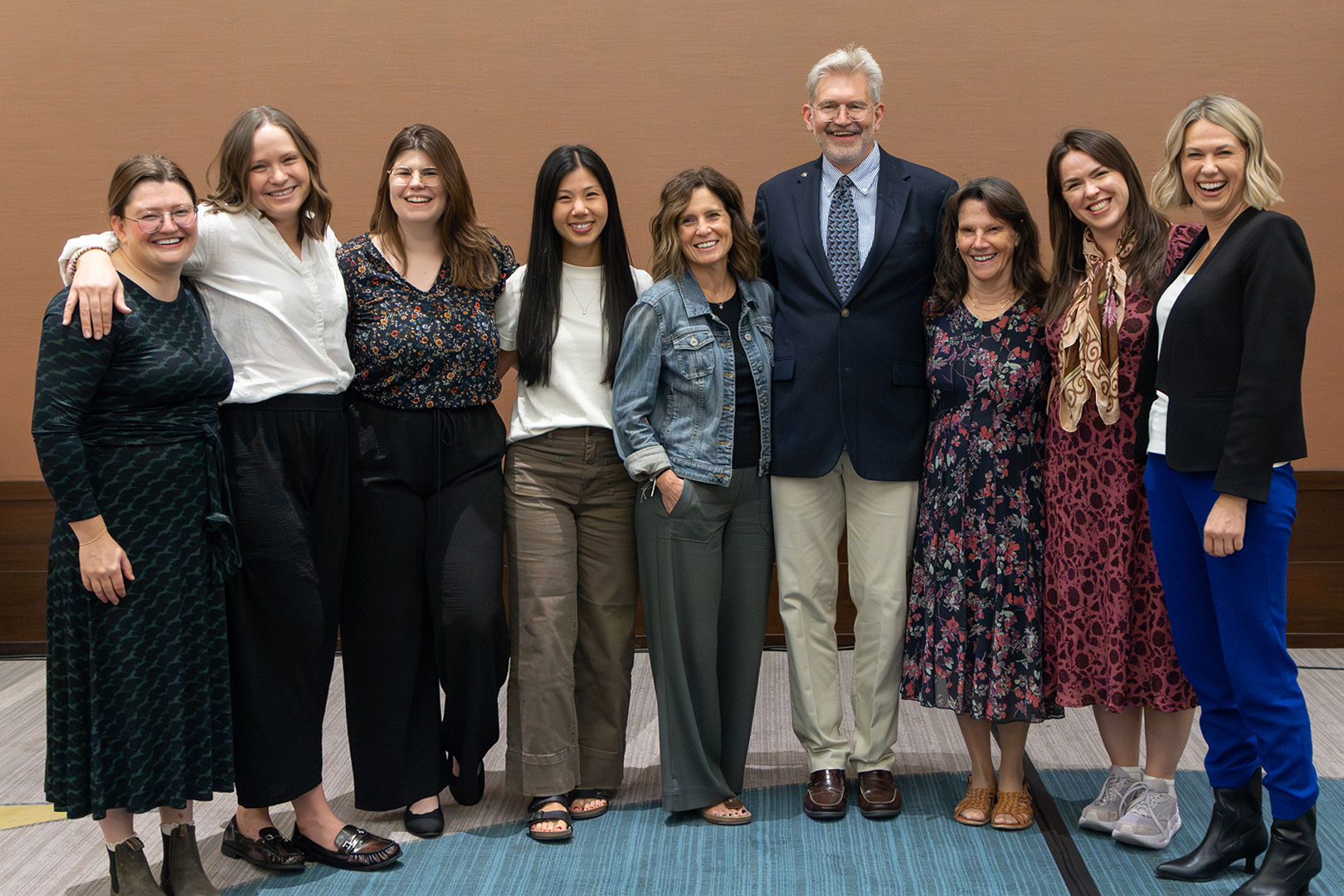
He credits the program’s success to a dedicated research team, many of whom traveled to Nashville to celebrate with him when he received the John G. Walsh Award.
Building a Culture of Research
Temte also helped strengthen primary care research in Wisconsin.
He transformed the Wisconsin Research Network into the Wisconsin Research and Education Network, expanding opportunities for physicians and clinics to participate in research that directly informs patient care. His efforts helped secure early federal support for practice-based research and reinforced the idea that important discoveries can emerge from community clinics as well as academic centers.
Over the course of his career, Temte authored or coauthored more than 150 publications and delivered presentations nationally and internationally. His work focused on translating complex scientific findings into practical information clinicians could use to improve community health.
“Clinical care, community and public health, research, education, service, and administration are all interdependent, complementary, and synergistic,” he said. “I was lucky to come along at a time when the generalist spirit of family medicine still prevailed.” He hopes future family physicians continue to embrace that broad perspective.
Shaping Future Physicians
While his research and public health leadership have earned national recognition, colleagues often point to Temte’s commitment to mentorship as one of his most enduring contributions.
Temte’s advice to future physicians reflects lessons learned from mentors throughout his career. He notes DFMCH has produced four recipients of the John G. Walsh Award: Dr. Eugene Farley, Dr. Richard Roberts, Dr. John Frey, and now Temte himself.
From Farley, he learned the importance of family and community to health and well-being. Roberts taught him that family physicians can do anything. From Frey came a guiding principle drawn from The Little Prince: “It is only with the heart that one can see rightly.”
To those lessons, Temte adds that patients and communities deserve care grounded in the best available evidence.
“I’ve been struck by the value of collecting and sharing data while maintaining a humanistic perspective,” he said.
A Lasting Legacy
The Folkert O. Belzer Award recognizes faculty members whose achievements have had a transformative impact on the UW School of Medicine and Public Health and on academic medicine.
For Temte, the recognition arrived at a fitting moment. As he retires, he leaves a legacy that spans patient care, public health policy, infectious disease research, and medical education.
Through decades of change in health care and public health, he remained committed to the core principles of family medicine, including relationships, listening, scientific rigor, and service.
Looking ahead, Temte remains optimistic about the future of the profession.
“Family physicians, residents, and clinic staff are good and caring people,” he said. “This gives me hope.”
Asked what legacy he hopes to leave behind, he simply says, “Treat others with abundant respect and kindness.”
The awards celebrate an extraordinary career, but they also show the lasting influence of a family physician who demonstrated how clinical care, scientific inquiry, public health, and compassionate service can work together to improve the health of patients, families, and communities.
Recent News
-
Jonathan Temte Honored for Lifetime Contributions as He Retires from UW
Jonathan Temte retires after more than three decades at UW, recognized with…
-
Morgan S. White, MD, Published in Family Medicine
Morgan S. White, MD outlines a case for tiered program signals in…
-
The Power of Story: How Elizabeth Fleming Uses Narrative Medicine to Shape Patient Care and Medical Education
Family physician Elizabeth Fleming explores how narrative medicine strengthens patient care, medical…
Contact Us
Do you have a newsworthy accomplishment to share?
Please send specific details and related photos to Laura Cruz.